The Pursuer II
Last part of the story of the former Chief Inquisitor of Massalia

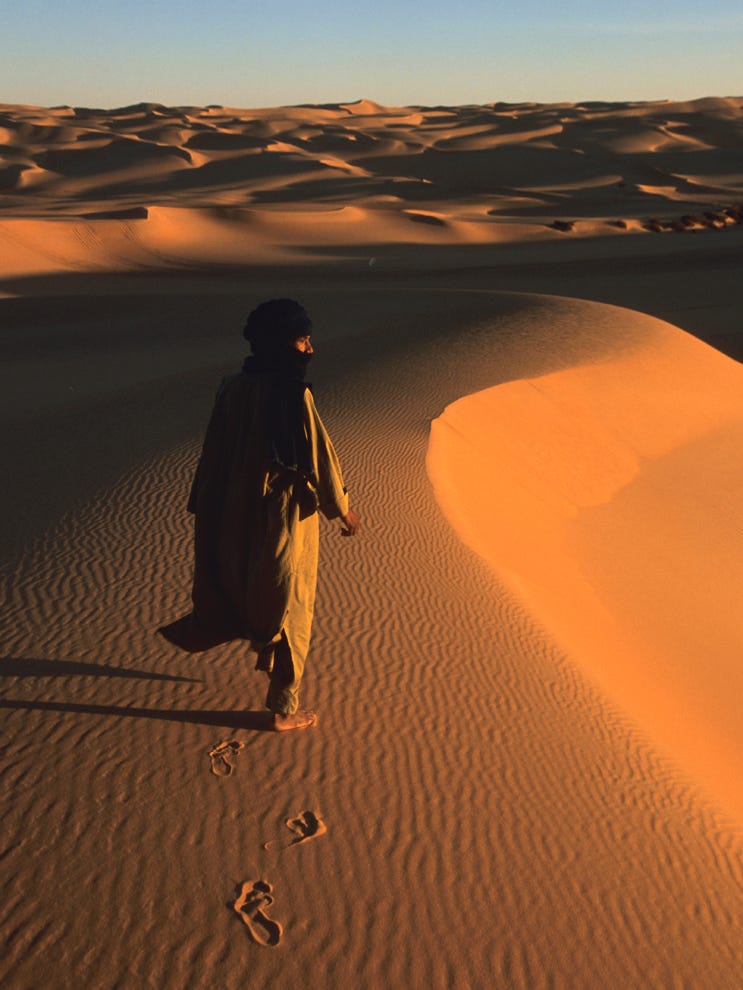
Yesterday, two young hawks quarreled over a serpent. Clawing at each other’s necks, tearing away blood-streaked feathers in cruel handfuls, they tugged fiercely at the lifeless body, their wings thrashing the still air with the fury of slingers poised to strike, rousing the desert that had lain slumbering until then. Today, a third bird has joined them. The three now circle above me in a grim dance, as if each sought to consume the other’s tail. Together, they form a ring around the sun, their shadows weaving dark omens upon the golden sands. Death approaches.
The Temple was my sanctuary through childhood and youth. I had no parents; the priests took me in and raised me as one of their own. My earliest memory stretches across the vast central corridor leading to the altar, where a small pyre, cradled in the hands of the god’s effigy, cast flames skyward, reaching for the dome above. Before that, my mind was cloaked in darkness, a void only dispelled by the sight of the Fire.
I immersed myself in the sacred texts, reciting them until every word was etched into my soul. The liturgy was my second tongue, its every syllable a melody I could sing without faltering. The theological disputes that consumed the priests in their councils stirred in me a fiery passion, a zeal unmatched among my peers. None could rival the strength of my body and the fervor of my spirit. When I turned fifteen, I joined the militia, excelling beyond all others. The searing coal pressed to my chest during initiation left its mark, branding me as a vessel for the eternal Fire that would never be extinguished, even as my own life waned.
I rose to command the inquisition. When the heresy we named the Way of the Savages began to spread, we launched an exhaustive campaign to purge it from the land. Night after night, we guarded the Temple, the royal palace, the homes of the influential people. We searched every dwelling, taking account of all who lived there. Yet the heretics, as silent as shadows slipping beneath closed doors, vanished as though consumed by the desert itself.
In time, word reached us of a bishop preaching a strange revival in a border town. He claimed the flame was erratic, untamed, its flickering a mirror of its essence—and thus, so too must be the essence of humankind, forged in the fires of creation. His doctrine sowed confusion among the simple, yet he was no mere zealot; he was among the kingdom’s most learned men. He defended his teachings before the Council with such subtlety that even the wisest among us wavered. But he was condemned to the pyre, alongside a third of his congregation, who had taken to cloaking themselves in animal hides and howling at the moon like wolves. Their ashes piled high in sacrificial mounds, and we seized the moment to seal our borders, extinguishing every trace of feral rebellion.
One moonlit night, I saw them. From my terrace, I spied two figures atop a rooftop, their arms raised to the heavens as they swayed in an otherworldly dance. Then came their spectral howls, unearthly cries that mimicked the wolves of the wilderness. I froze, my body seized by a strange tremor. I had never witnessed the heretics’ rites before, and yet I was gripped by a fascination I could not name, like a child beholding a forbidden marvel. For reasons I cannot explain, I felt safe. That night, I told no one and did not sleep.
When the inner walls fell, and the King took his own life, and the bishops turned upon one another with accusations of heresy, The Temple seized control of the city, and I became its de facto governor. Yet discontent simmered. A guild of blacksmiths, weary of the soldiers’ excesses, sparked a revolt that ignited a fierce blaze. Twenty homes were consumed in a single day, the flames roaring ever higher. The Fire, our god and symbol of power, now mocked us with its unbridled ferocity, as if demanding greater reverence than our certainty could offer.
The militia rebelled, pledging allegiance to the Temple. The final betrayal was mine to bear. I had grown complacent, and my enemies seized the moment. Branded a heretic, accused of sowing chaos and twisting doctrine, I was cast out. My family abandoned me, my name became ash upon the tongues of men, and only the desert offered me refuge.
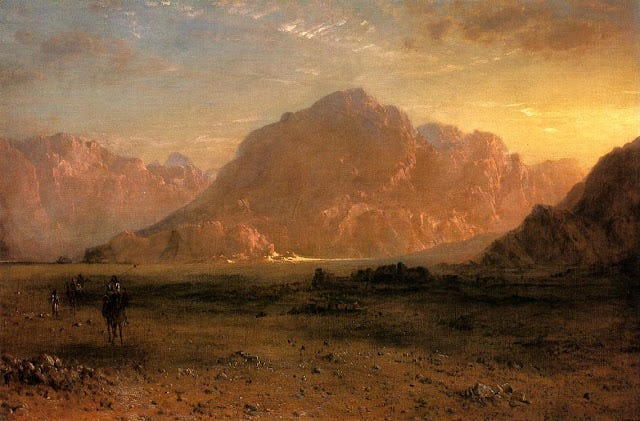
For nights unnumbered, I wandered aimlessly, uncertain if any destiny awaited me. The desert whispered strange sounds—whistles, howls—not quite human, not wholly beast. I recalled the Prelate’s writings in his Geographia Borealis:
"There dwell men in the desert’s deepest caverns who move as beasts, worshipping headless gods with abdominal maws, walking ever against the wind. Others burrow beneath the sands, their minds unhinged by the night, bowing to deities that devour themselves and rise anew…”
The nights are bitterly cold, yet the chill carries a strange solace. For countless evenings I have scanned the horizon, seeking anything beyond endless dunes, but the distance feels insurmountable. If the wild gods circle me, then it is their breath that chills my neck, their unseen eyes that linger in the shadows.
Last night, I beheld a trembling mound of sand. Suddenly, it pulsed, casting grains outward as a shadow began to rise. I had nowhere to hide, so I crouched low, knowing such feeble concealment would not save me. Another shadow followed, then another, and more behind them. I knew, with some obscure certainty, that others approached from behind.
I thought, I have strength yet; I can face them. But they were many—I could feel it. Their stealthy steps disturbed the serpentine sands, their breaths filled the air with whispers of death. They loomed over me, yet I felt no fear.
Dawn has come, and the sun is merciful in its warmth. Yet I see their shadows still, watching, waiting. I meet their gaze without terror, only a strange sense of belonging. My robes are gone, replaced now by the coarse hide of a wolf. Today, I shall rest and await the night. I know not where I go, but I will walk forward, following the desert’s eternal path. Above me, the hawks circle anew moving ever in reverse—now two, now one.